
Curtain Fabrics Guide
Understand linen, sheer linen, velvet, cotton, designer textiles, and customer-supplied fabric—plus the weight, drape, and opacity that shape the finished curtain.
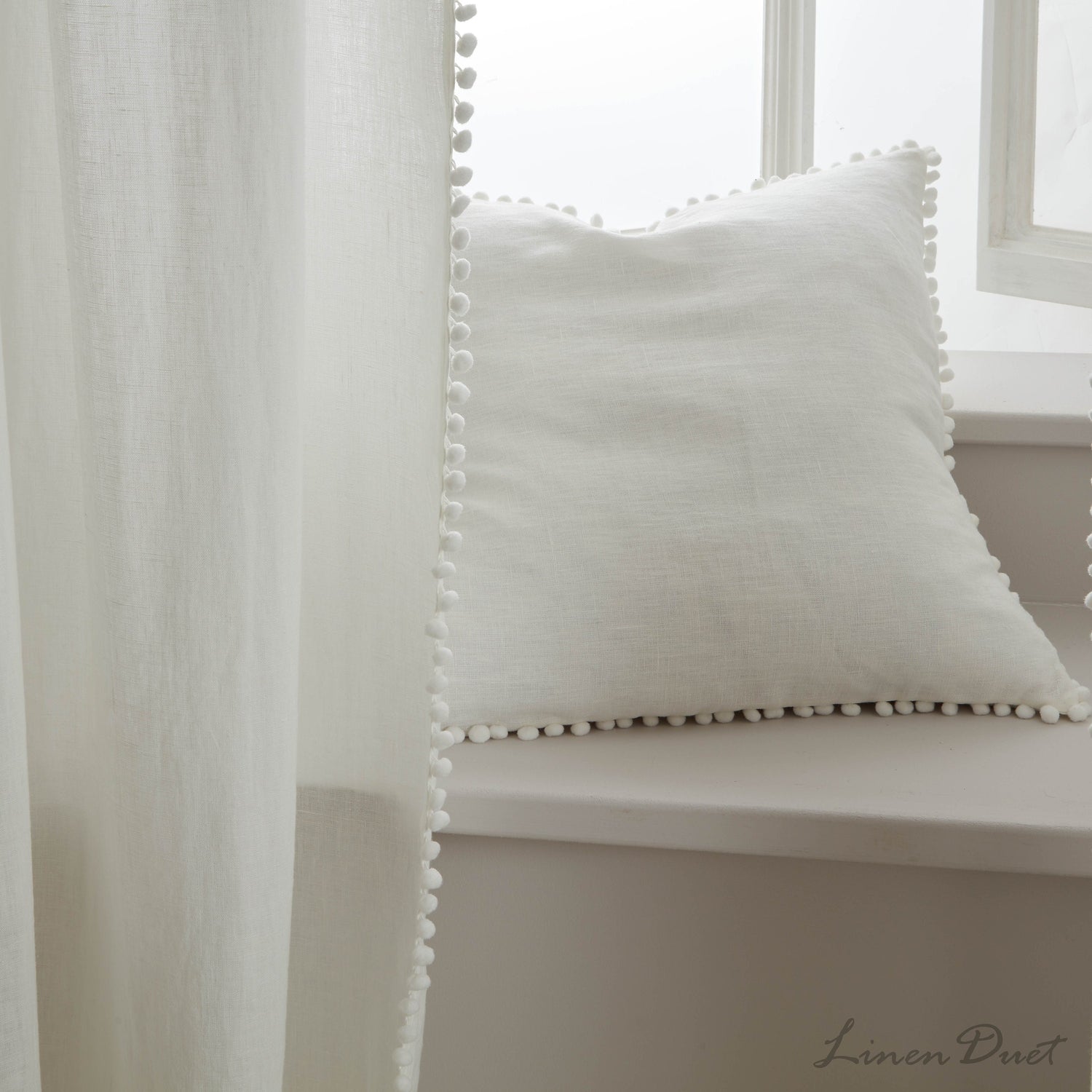
How a curtain fabric behaves
Fiber is only one part of the choice. Weight, weave, opacity, width, finish, and pattern repeat all influence drape, fullness, light, and the amount of fabric a custom curtain requires.
Light to substantial
Lighter fabrics move easily and filter light. Heavier fabrics create body and need hardware sized for the finished treatment.
Crisp to fluid
A fluid textile forms softer folds; a firm textile holds a more architectural shape. Lining changes both.
Sheer to opaque
Test a swatch against daylight and at night. Room lighting can reveal silhouettes through fabrics that seem private by day.
Width & repeat
Fabric width and pattern repeat affect seams, motif placement, matching, and yardage.
Compare curtain fabrics
Use these as starting points, then order samples. Color, hand, and transparency are best judged in the actual room.
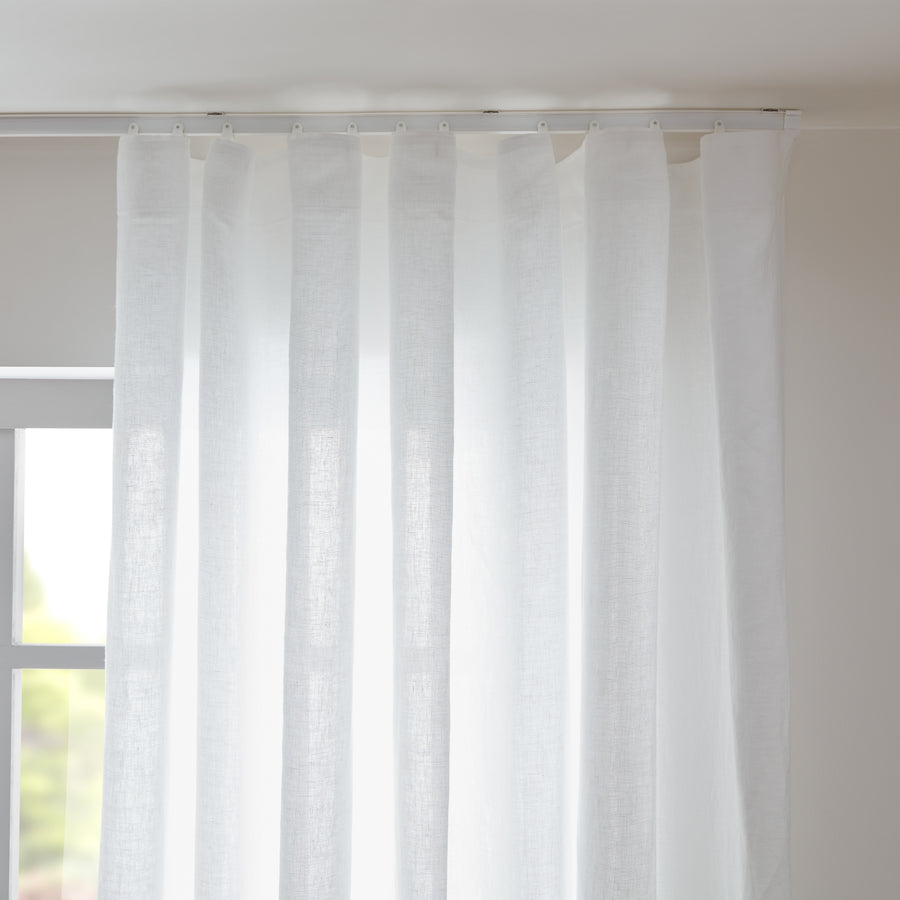
Semi-sheer linen
Natural texture and softly filtered daylight give semi-sheer linen an airy but more substantial look. It offers gentle screening and can be layered or lined when greater privacy is needed.
Shop linen curtains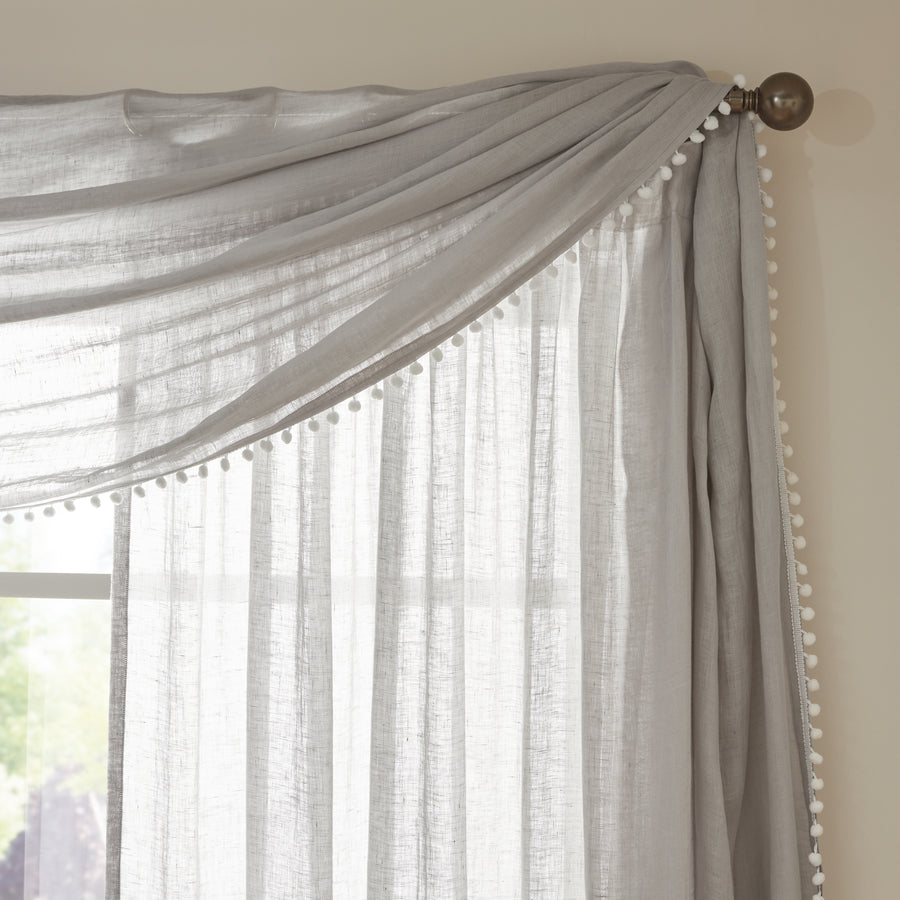
Sheer linen
Airy and translucent, sheer linen softens the view without closing the room. It works beautifully alone where privacy is limited or layered with a shade or heavier curtain.
Explore sheer linen
Velvet
Dense pile creates depth, rich color, and a substantial fall. Consider direction of nap, finished weight, stack-back, and strong enough hardware.
Shop velvet curtains
Cotton
Versatile cotton ranges from light and crisp to dense and softly brushed. Construction and finish matter, so judge the specific sample rather than fiber name alone.
Ask about custom sewing
Designer fabrics
Pattern, embroidery, weave, and color can make the curtain a focal point. Plan motif placement, pattern matching, usable width, and any special handling.
Use a designer fabric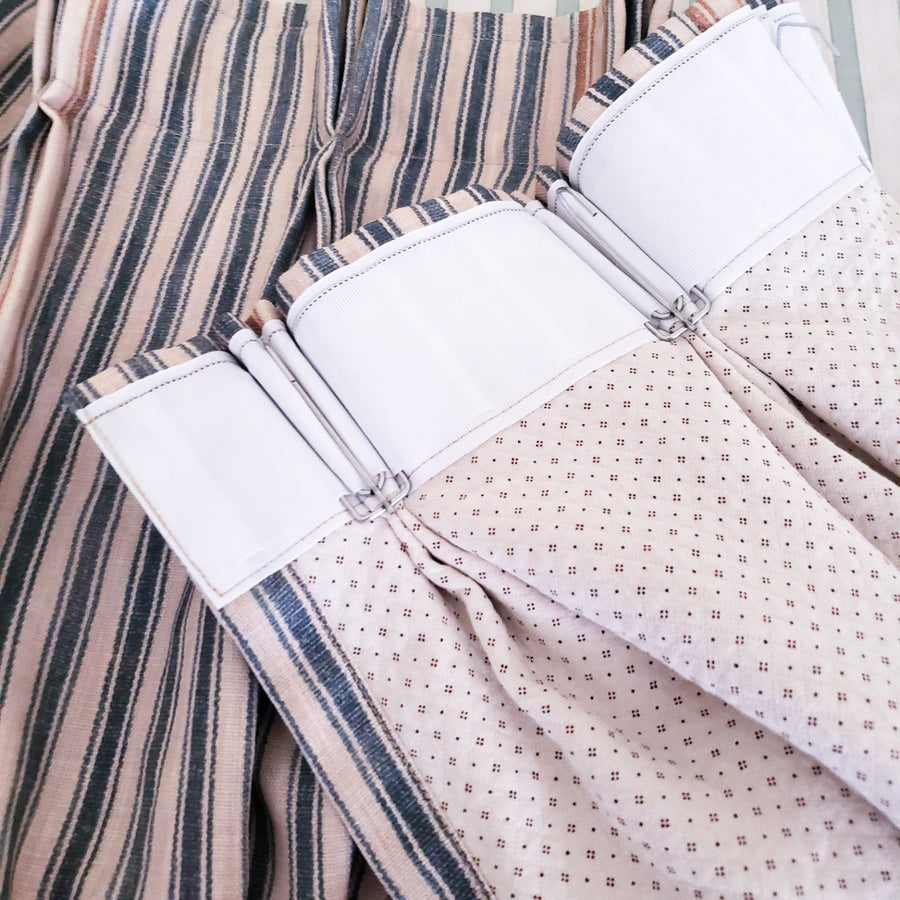
Your own fabric
Customer-supplied material makes a room highly personal. Linden Studio can review suitability, yardage, pattern direction, flaws, and proposed construction before sewing.
Curtains from your fabricEvaluate a curtain fabric sample
- Hang the sample vertically beside the window; fabric reads differently standing than lying on a table.
- View it in morning, afternoon, and artificial light.
- Place it beside wall color, flooring, upholstery, and nearby wood or metal finishes.
- Gather it loosely to see how the color deepens inside folds.
- Hold it against the glass to judge opacity and backlighting.
- Layer it over the proposed lining because lining can shift color and hand.
For fabric by the yard: calculate with the finished curtain specification, usable fabric width, hems, headings, seams, pattern repeat, and matching allowance. Do not buy yardage from window size alone.
Sending your own fabric
Confirm the material is suitable for the intended heading and finished size before shipping it. Provide the manufacturer, fiber content, width, vertical and horizontal repeat, care instructions, and right-side orientation. Inspect the full yardage for flaws and clearly mark the top if the motif direction is not obvious.
Curtain fabric questions
Is linen a good fabric for curtains?
Does heavier fabric provide blackout?
Can Linden Studio sew curtains from my fabric?
Choose fabric with a sample, not a screen
Once the face fabric feels right, compare lining choices to fine-tune privacy, light control, body, and the finished drape.