
Curtain & Shade Lining Guide
Choose between unlined, privacy cotton, and blackout lining according to the light, privacy, drape, and protection your room needs.
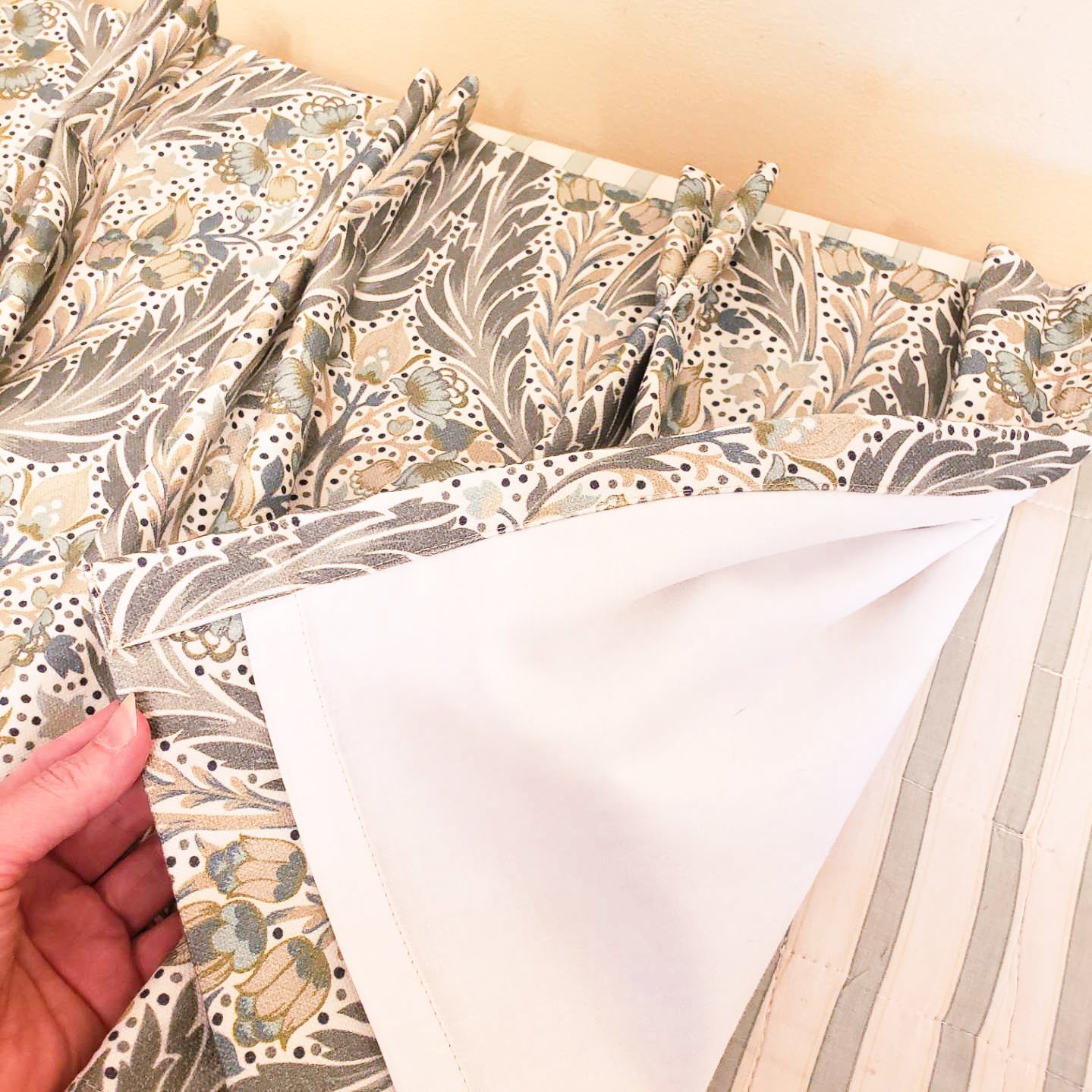
Light, privacy, body & protection
Lining sits behind the face fabric. It can reduce transmitted light, improve evening privacy, give folds more body, create a finished reverse, and reduce direct exposure of the face fabric to sunlight. It does not eliminate light around the edges.
No lining
Preserves translucency, lightness, and movement. Best for sheers, decorative layers, and rooms where privacy or darkness is not the priority.
Privacy cotton
Adds body and a polished back while diffusing light. White cotton keeps the reverse bright; natural cotton can complement warmer, earthy fabrics.
Blackout polyester
Designed to block light through the textile and create a fuller, more structured curtain. Edge gaps still require thoughtful hardware and installation.
Which curtain lining should you choose?
| Construction | Light effect | Privacy | Drape | Good fit |
|---|---|---|---|---|
| Unlined | Preserves available light | Varies; often low at night | Lightest and most fluid | Sheers and decorative panels |
| White cotton privacy | Softens and reduces light | Improved | Adds soft body | Living, dining, street-facing rooms |
| Natural cotton privacy | Softens light with a warmer undertone | Improved | Adds soft body | Warm neutral and natural textiles |
| Blackout polyester | Blocks transmission through fabric | Strongest | Heavier and more structured | Bedrooms, nurseries, media rooms |
Blackout is a system, not only a fabric. For better darkness, plan generous side coverage, a center overlap, returns to the wall, and a high installation. A layered shade can reduce remaining perimeter light.
Choose for the room and routine
- Living room: privacy cotton is a balanced starting point when you want a polished drape without making the room dark.
- Bedroom: blackout is useful when sleep and glare control matter; consider how the treatment closes at the center and sides.
- Nursery: prioritize darkness, secure installation, and current child-safety requirements for any operating cords.
- Dining room: privacy lining can add body and an attractive exterior-facing finish.
- Sheer layered window: keep the sheer unlined and pair it with a separate lined curtain or shade for flexible control.
Fabric protection and care
Lining places another layer between the face fabric and the glass, but no interior textile is immune to fading. Exposure depends on orientation, glazing, climate, color, fiber, and time. Follow the care instructions for the complete lined construction; the most delicate layer determines safe cleaning.
Lining questions
Will blackout lining make a room completely dark?
What is the difference between white and natural cotton lining?
Can sheer curtains be lined?
Match lining to your fabric and room
Explore custom sewing options, or ask Linden Studio to recommend a lining starting point for your fabric, room, and light-control goals.