
How to Measure for Curtains
Measure the hardware, finished width, curtain length, fullness, and stack-back in the right order—before you place a custom order.
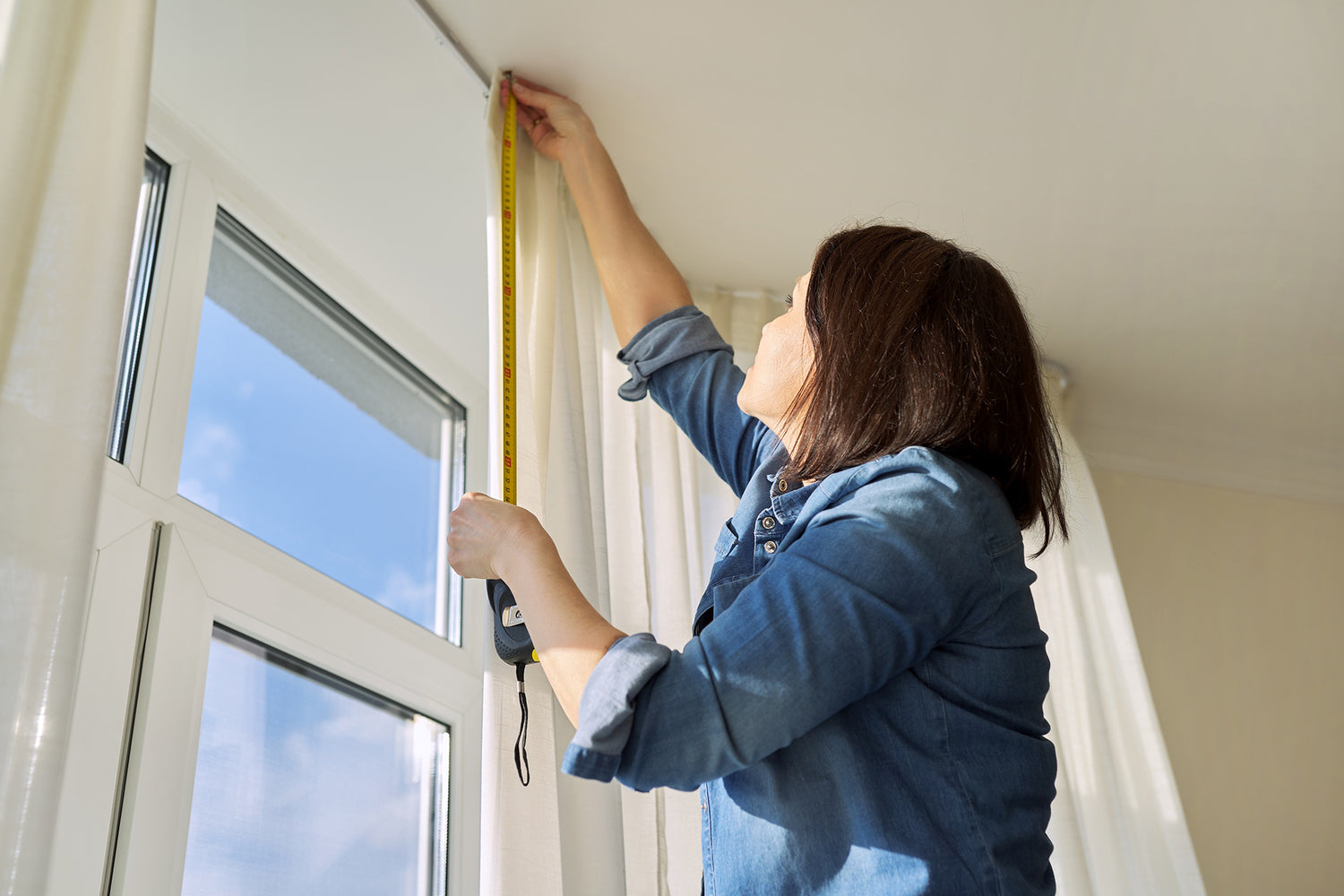
Measure from the hardware, not just the window
Custom curtain dimensions are based on the rod or track and the final hanging point. Choose the heading and hardware, sketch the wall, and label every number before you calculate fullness.
Gather first
Metal tape measure, pencil, level or laser, step ladder, and a second person for tall or wide spans.
Heading & hardware
Know whether the curtain hangs from a rod, ring eye, hook, or track carrier. That point determines the drop.
Width × length
Write the unit on every dimension. Note whether width means finished coverage or flat fabric width.
How to measure for curtains
Work in this sequence so one decision does not invalidate the next.
Map the window and obstacles
Sketch the casing, ceiling, adjacent walls, molding, radiators, vents, furniture, handles, and outlets. Measure each window separately, even when openings look identical.
Choose where the hardware will sit
Mark the planned rod or track height. A higher placement can emphasize ceiling height; extending past the frame gives open panels room to stack and exposes more glass. Confirm that the mounting surface can support the treatment.
Measure the finished curtain width
Measure the usable span of the installed rod between finials or the working track length. If hardware is not installed, record the planned outside marks and label the dimension as proposed.
Allow for stack-back, overlap, and returns
Stack-back is the wall space used by open curtains. Full, lined, or heavy panels need more. Also note any center overlap and side return needed for privacy or light control.
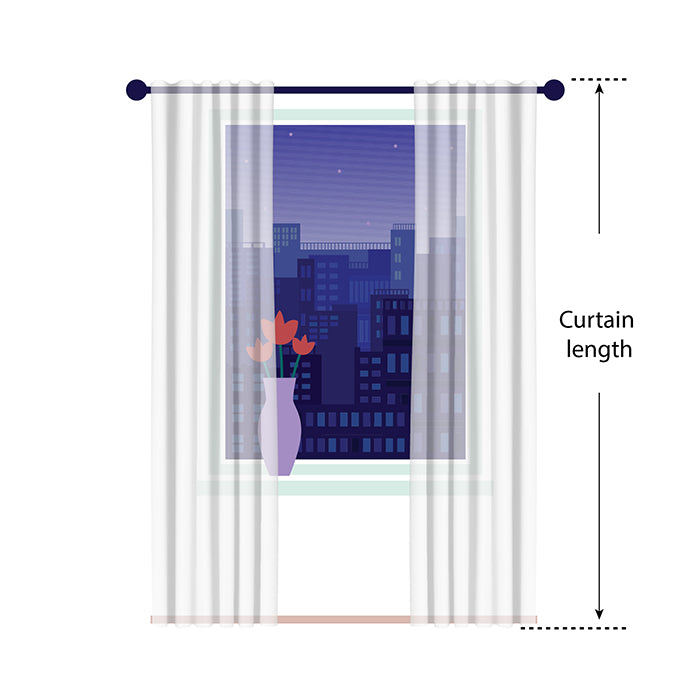
Measure curtain length from the correct point
Measure from the actual attachment reference—rod, ring eye, hook, or carrier—to the chosen hem. For floor-length curtains, check left, center, and right because floors may vary.
Calculate or confirm fullness
For gathered flat panels, fullness equals total flat fabric width divided by finished coverage width. Pleated and ripple-fold curtains may be sold by finished width with fullness already engineered, so follow the product specification.
Double-check the full specification
Confirm unit, room, window name, hardware width, mounting height, finished drop, panel count, opening direction, heading, lining, fullness, overlap, return, and obstacles.
Curtain width, fullness & stack-back
Measure the width the curtains must cover, not simply the width of the glass. If you want the window to feel larger and preserve daylight when panels are open, plan hardware beyond the casing where the wall allows.
| Term | What it means | Why it matters |
|---|---|---|
| Finished width | The closed coverage across the rod or track. | This is the starting dimension for custom pleated systems. |
| Flat width | The total fabric width before gathering. | Used to calculate fullness for gathered headings. |
| Fullness | Flat width ÷ finished coverage width. | Controls how generous the folds appear. |
| Stack-back | Space occupied by open curtains. | Determines rod extension and the amount of glass left visible. |
| Return | Distance from the rod or track back to the wall. | Helps close the side gap and improves the profile. |
Example: Two flat panels measuring 100 inches each across a 100-inch usable rod width create 2× fullness: 200 ÷ 100 = 2. For fixed pleats or ripple fold, do not apply this formula unless the product instructions request flat width.
Where should curtains end?
Choose the finished hem position before measuring the drop. These four common lengths balance proportion, function, and maintenance differently.
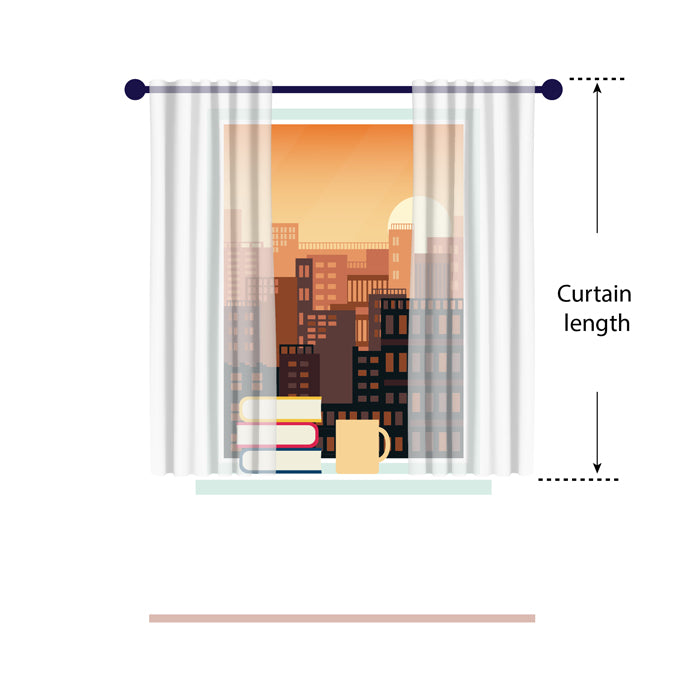
Sill length
A compact option for working surfaces and small windows. Define the intended clearance precisely.
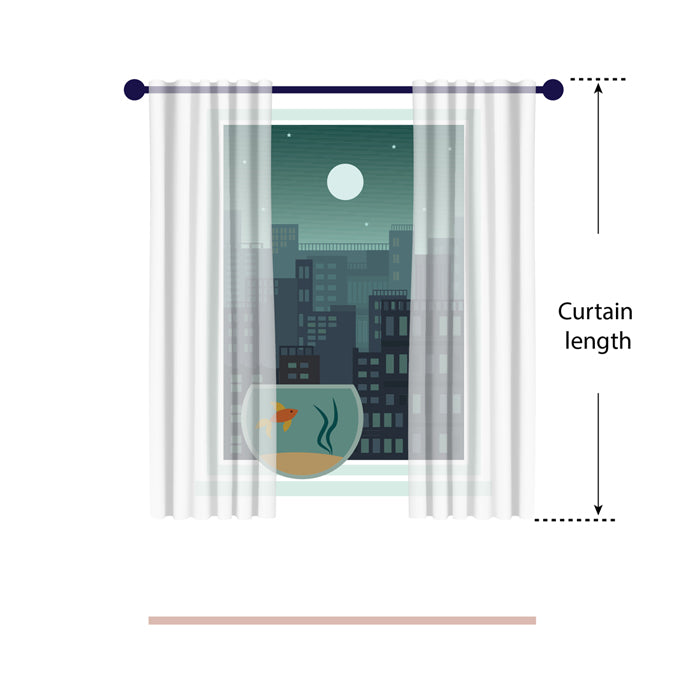
Below the sill
A deliberate short treatment that extends past the casing while clearing furniture or heat sources safely.
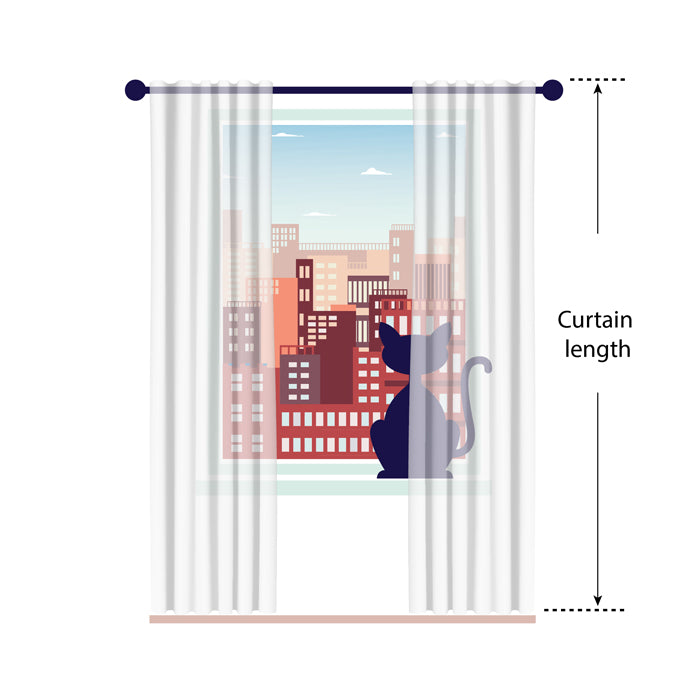
Floor-skimming
A tailored, practical finish. Measure at the left, center, and right because floors can vary.
Touching or breaking
A softer finish with slight contact at the floor. Allow enough extra length for the intended break without creating a full puddle.
Considering a puddled finish? Extra fabric is intentionally arranged on the floor. It is decorative and higher maintenance, so it is usually best away from busy walkways, pets, moisture, and frequent opening.
How high should you hang your curtains?
Rod height changes the apparent scale of both the window and the room. Use the architecture, finished curtain length, heading, and mounting surface—not a universal number—to determine the right position.

Curtain measuring questions
Do I measure the window or the curtain rod?
How much wider should the rod be than the window?
Should I round my measurements?
Uncertain about one dimension?
Pause before ordering a custom size. Send a labeled sketch and photographs so Linden Studio can understand the window, hardware plan, and intended finished look.